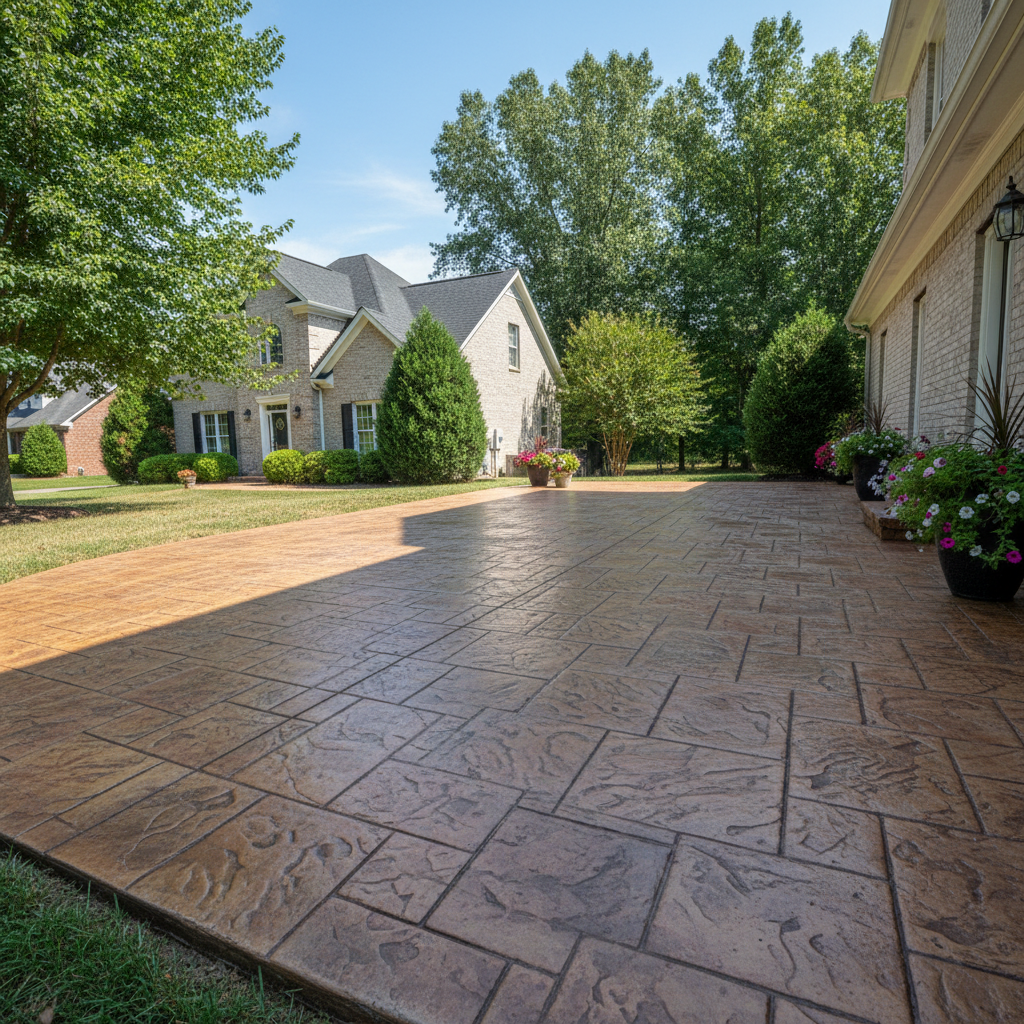
So, you've got stamped concrete. Maybe it's a patio, a walkway, or even a driveway. You probably picked it because it looks good, right? It's great at mimicking natural stone or brick without all the hassle. But just like anything nice you put around your Athens home, it needs a little love to stay that way. This isn't exactly rocket science, but ignoring it can turn that beautiful surface into a faded, cracked mess faster than you'd think. And nobody wants that.
Your Stamped Concrete's Yearly Check-up
Think of this like your concrete's annual physical. The single most important thing you can do to make your stamped concrete last longer is to keep that sealer coat in good shape. That sealer acts like sunscreen for your concrete, protecting it from UV rays, moisture, and just general wear and tear. Down here in Athens, with our hot summers and those occasional ice storms that pop up out of nowhere, that sealer really works overtime.
You should plan on resealing your stamped concrete every 2-3 years. If it's in a high-traffic spot, like a busy walkway or a patio where you're always entertaining, you might even need to do it every year. How can you tell if it's time? Pour a little water on it. If the water beads up nicely, you're probably fine. But if it soaks in and darkens the concrete, then yep, it's definitely time to reseal. Don't put it off, seriously. That's when problems really start.
Before you reseal, you'll need to clean the surface thoroughly. A good pressure washing (use a low setting, please; don't go crazy and blast away the color or the old sealer) with a mild detergent usually does the trick. Just make sure it's completely dry before you put on the new sealer. I've seen folks rush this step, and it just leads to cloudy, peeling sealer that, frankly, looks worse than doing nothing at all.
Regular Maintenance: Simple Habits, Big Impact
Beyond the annual resealing, keeping your stamped concrete looking sharp mostly comes down to common sense. Here's what I tell my clients:
- Sweep it regularly: Get rid of leaves, dirt, and debris. This stops organic stuff from breaking down on the surface and causing stains or holding moisture.
- Wash it down: A hose and a stiff brush can work wonders for general grime. For tougher spots, a mild dish soap and water solution works just fine.
- Tackle spills right away: Oil, grease, rust, pet waste – all these can stain if they sit too long. The sooner you clean them, the better your chances of preventing a permanent mark.
- Watch out for de-icers: If we get one of those rare Athens snowfalls or ice events, be careful what you use. Salt-based de-icers can be really harsh on concrete, especially if it's not sealed properly. Sand is a safer bet, or look for de-icers specifically labeled as concrete-safe.
- Avoid harsh chemicals: Bleach, strong acids, or abrasive cleaners can strip the sealer and even damage the concrete's surface or color. Stick to the mild stuff.
One thing I always tell people, especially those in older neighborhoods like Cloverleaf, is to keep an eye on tree roots. If you've got big trees nearby, their roots can sometimes push up concrete over time. It's not a maintenance issue you can fix with a broom, but it's definitely something to be aware of.
Warning Signs You Can't Ignore
Your stamped concrete will usually give you a heads-up when something's wrong. Don't ignore these signals:
- Fading color: If your vibrant pattern is starting to look dull or washed out, your sealer is probably gone. That means the sun is starting to bleach the color right out of the concrete itself.
- Flaking or peeling sealer: This means the sealer wasn't put on correctly, or it's just worn out and failing. It's not protecting anything anymore, is it?
- Cracks: Small hairline cracks are sometimes unavoidable, especially with our expansive clay soils here in North Alabama. But if they're getting wider, longer, or if you see pieces of concrete spalling (flaking off), that's a bigger issue.
- Pitting: Little holes or pockmarks on the surface can be caused by freeze-thaw cycles if water gets trapped in the concrete, or from aggressive de-icers.
- Uneven settling: If one section of your concrete starts to sink or lift significantly, you've got a sub-base problem, not just a surface one.
When to Call in the Pros
Look, a lot of this maintenance you can handle yourself. But there are times when it's just smarter to bring in someone who does this for a living. You should call Sunrise Concrete Solutions if:
- You've got significant cracking or spalling: These aren't just cosmetic. They can point to structural issues or lead to much bigger problems down the line. We can assess if it's a simple repair or something more involved.
- The color is severely faded or uneven: Sometimes, a simple reseal won't cut it. We might need to re-tint or re-stain sections to bring back that original look.
- You're seeing widespread pitting or surface deterioration: This often means the concrete itself is compromised, and you'll need expert advice on repair or replacement options.
- There's noticeable settling or heaving: This points to issues with the ground underneath your concrete, which requires specialized knowledge to fix correctly.
- You're just not comfortable doing it yourself: Resealing can be a bit of a job, especially on a large area. If you'd rather spend your Saturday doing something else, give us a call. We've got the right equipment and experience to get it done right, without you breaking your back.
Taking care of your stamped concrete isn't a huge chore, but it's important. A little preventative maintenance goes a long way in keeping it looking great and protecting your investment for years to come.