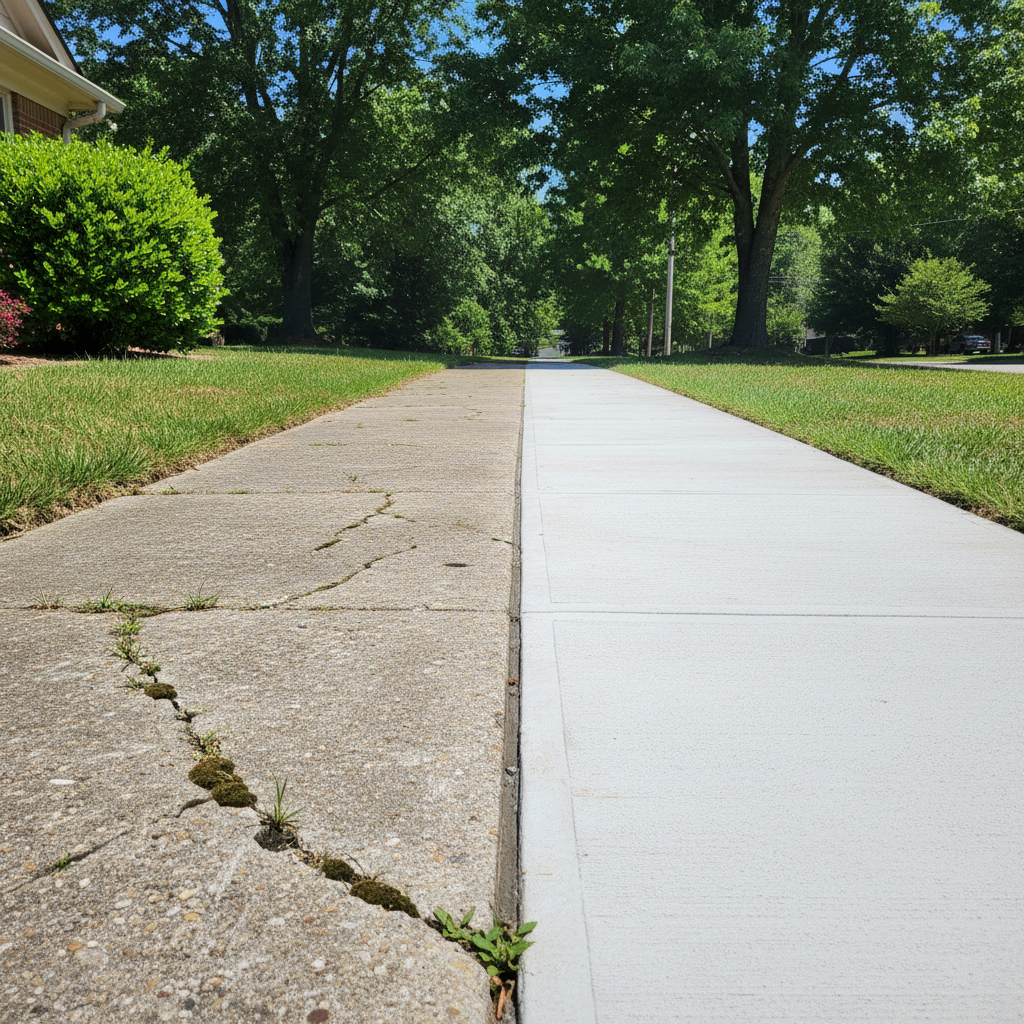
So, you need a new sidewalk, or maybe you're finally getting around to replacing that old, cracked one. Right away, you're probably thinking about two main options: poured concrete or those individual concrete pavers. Both will definitely get the job done, but they're not exactly alike, especially when you consider our weather here in Athens, AL. I've personally laid a lot of both over the years, and I can tell you there are some big differences you should know about before you decide.
Poured Concrete: The Old Reliable
When most folks picture a sidewalk, they're probably seeing poured concrete. It's everywhere, and for good reason. We mix it up, pour it right into place, and then finish it smooth or give it a broom texture for grip. Pretty straightforward, right?
Cost
Generally speaking, poured concrete is usually your more budget-friendly choice upfront. The materials are often cheaper, and it's just faster to install one big, continuous section than to lay a bunch of individual blocks. If you're on a tight budget and just need a solid path, this is often the way to go.
Durability & Maintenance
A concrete sidewalk, installed correctly with good sub-grade prep and expansion joints, is incredibly tough. It can easily last for decades. The biggest problems we tend to see around here are cracks from tree roots, poor drainage, or our clay soils shifting with all the rain we get. If a section does crack or heave, fixing it usually means cutting out that part and pouring a new one. That can leave a visible patch, unfortunately. Maintenance is pretty minimal – just keep it clean and maybe seal it every few years to protect it from stains and moisture.
Appearance
Poured concrete gives you a clean, continuous look. You can broom finish it for traction, or get a smoother troweled look. You can also add color or even stamp it to mimic other materials, though that does add to the cost and complexity. For a basic, no-frills sidewalk, it's perfectly functional and neat.
Concrete Pavers: The Flexible Alternative
Pavers are individual blocks, usually made of concrete, that interlock or fit together to form a surface. Think of them like a big puzzle for your walkway.
Cost
This is where pavers typically get more expensive. The material cost per square foot is higher than poured concrete, and the labor involved in laying each paver by hand, leveling it, and sweeping in joint sand also adds up. You're paying for that intricate, custom look, after all.
Durability & Maintenance
Here's where pavers really shine, especially in our climate. Because they're individual units, they have built-in flexibility. When our ground freezes and thaws, or when those notorious Athens tree roots start pushing up, pavers can shift and settle without cracking. If one gets damaged, you can usually just pull out that single paver and replace it. That's a huge advantage over a big concrete slab. Maintenance involves keeping the joints filled with sand (often polymeric sand these days, which hardens up) and occasionally cleaning. You might need to re-sand every few years, but it's not a huge chore.
Appearance
Pavers offer a ton of design flexibility. You can get them in all sorts of shapes, sizes, colors, and patterns. Want a rustic look? A modern one? Something that mimics brick or natural stone? Pavers can do it. This allows for a much more custom and often more aesthetically pleasing sidewalk, especially if it's a prominent feature of your home's curb appeal.
My Recommendation for Athens Homeowners
Look, if you're on a tight budget and just need a functional path, a well-installed poured concrete sidewalk from a company like Sunrise Concrete Solutions will serve you well for a long time. It's a solid choice.
However, if your budget allows, I'm going to lean towards concrete pavers for most Athens homeowners, especially for a primary walkway. The flexibility they offer against our expansive clay soils and the freeze-thaw cycles we get is a huge benefit. You're less likely to see major cracking, and repairs are usually much simpler and less noticeable. Plus, the design options mean you can really enhance your home's look. You'll pay more upfront, but the long-term durability and ease of repair often make it a smarter investment here in North Alabama.
Ultimately, it comes down to your priorities: budget, appearance, and how much you want to worry about potential repairs down the line. Give us a call, and we can talk through your specific situation.