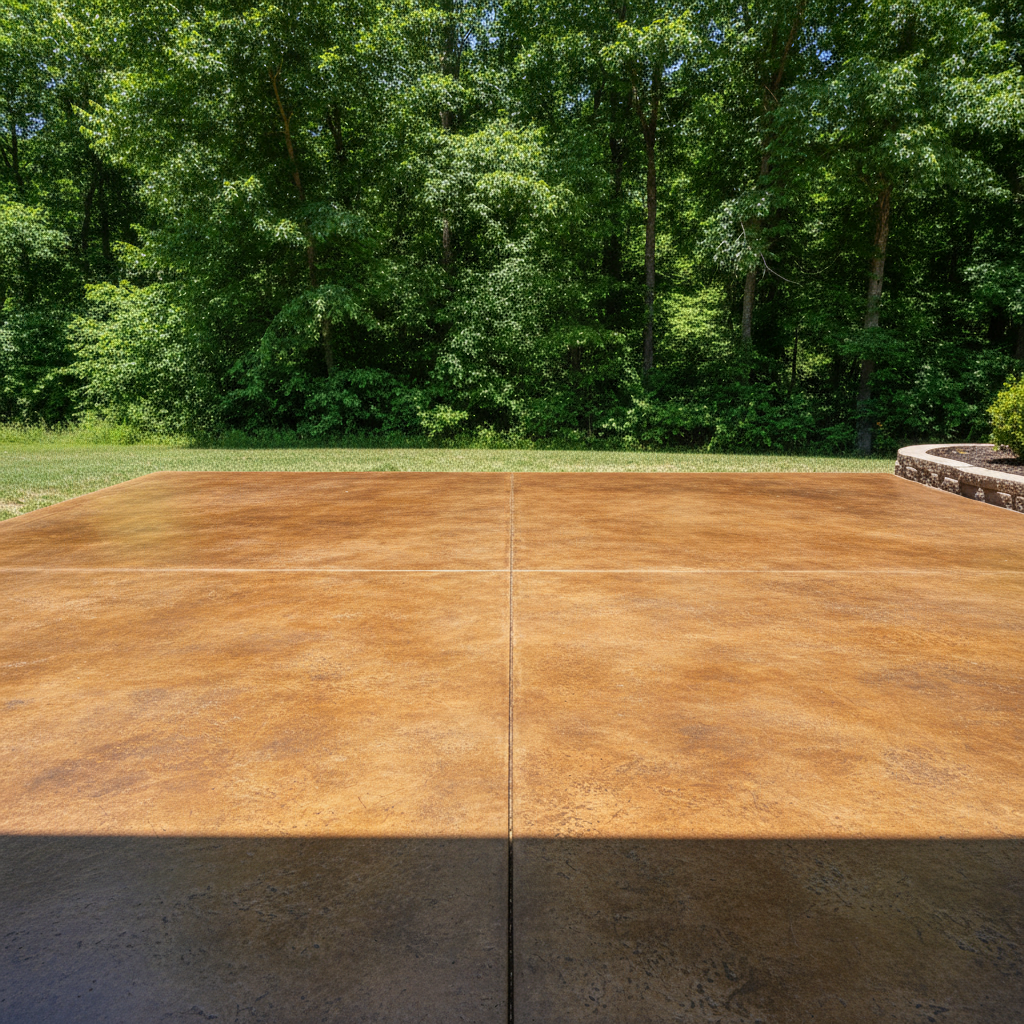
So, you've got stained concrete, right? Maybe it's your patio, your garage floor, or even an indoor space. It looks sharp, doesn't it? That rich color and unique finish really add something special. But here's the deal: to keep it looking that good, you can't just set it and forget it. Especially not here in Athens, where our weather can be pretty tough on outdoor surfaces.
Make Your Stained Concrete Last Longer
The biggest thing you can do to make your stained concrete last is proper sealing. When I or another pro applies a stain, we always seal it. That sealer is your concrete's main line of defense against just about everything. Over time, especially outdoors, that sealer wears down. It gets beat up by the sun, rain, foot traffic, and even those crazy temperature swings we get, going from a warm 70 degrees one day to freezing the next. For outdoor stained concrete, you're usually looking at resealing every 2-5 years. Indoors, it can last much longer, maybe 5-10 years, depending on how much action it sees. If you're not sure when it was last sealed, or if it's starting to look dull, it's probably time to think about it.
Another big one? Protect it from heavy impact and harsh chemicals. Don't drag heavy furniture across it without protection, and if you're working with something like battery acid or strong solvents, be super careful. These can eat right through the sealer and even damage the stain itself, leaving permanent marks.
Regular Maintenance: What You Need to Do
Keeping your stained concrete clean is pretty straightforward, but it's important. For outdoor surfaces, a simple sweep and then a hose-down with water usually does the trick. If you've got some stubborn dirt or grime, a mild, pH-neutral cleaner and a soft brush can help. Stay away from anything acidic or abrasive, like bleach or harsh degreasers, as these can dull or strip the sealer. For indoor floors, regular sweeping or vacuuming and then mopping with a pH-neutral cleaner is all you need. Think about how you'd clean a tile floor — it's pretty similar.
For those outdoor areas, especially if you're in a spot like the older neighborhoods around the Square where there are lots of mature trees, you'll want to keep leaves and debris from sitting on the surface for too long. Decomposing organic matter can hold moisture and eventually break down your sealer faster.
Warning Signs You've Got a Problem
You're probably wondering, how do I know if something's wrong? Well, there are a few tell-tale signs. The most common one is the sealer starting to look dull, hazy, or even peeling in spots. If water doesn't bead up on the surface like it used to, that's a clear sign your sealer is wearing thin and needs attention. You might also notice the color of the stain looking faded or uneven. This is especially true for outdoor patios that get a lot of direct sun, like those facing south or west.
Cracks are another thing to watch for. Small hairline cracks are pretty common in concrete and usually aren't a huge deal, but if you see them getting wider, or if new, larger cracks appear, that could indicate a bigger issue with the slab itself. Also, look out for white spots or efflorescence, which is a powdery substance that can come up from inside the concrete. This means moisture is moving through your slab, and while it's not always a disaster, it's something to keep an eye on, especially if it's persistent.
When to Call a Professional
Look, I'm a big believer in DIY when it makes sense, but some things are best left to the pros. If you're seeing widespread sealer failure, significant fading, or those larger cracks I mentioned, it's time to call someone like us at Sunrise Concrete Solutions. Trying to fix a large peeling area yourself can often make it look worse, and applying a new sealer over a failing one without proper prep is just a waste of time and money. We've got the right tools, materials, and experience to assess the situation and recommend the best course of action, whether it's a simple reseal, a more involved strip and reseal, or even repair work.
If you're unsure about anything, just give us a call. It's always better to catch a small problem early than to let it turn into a big, expensive headache. We're here to help keep your concrete looking its best for years to come.