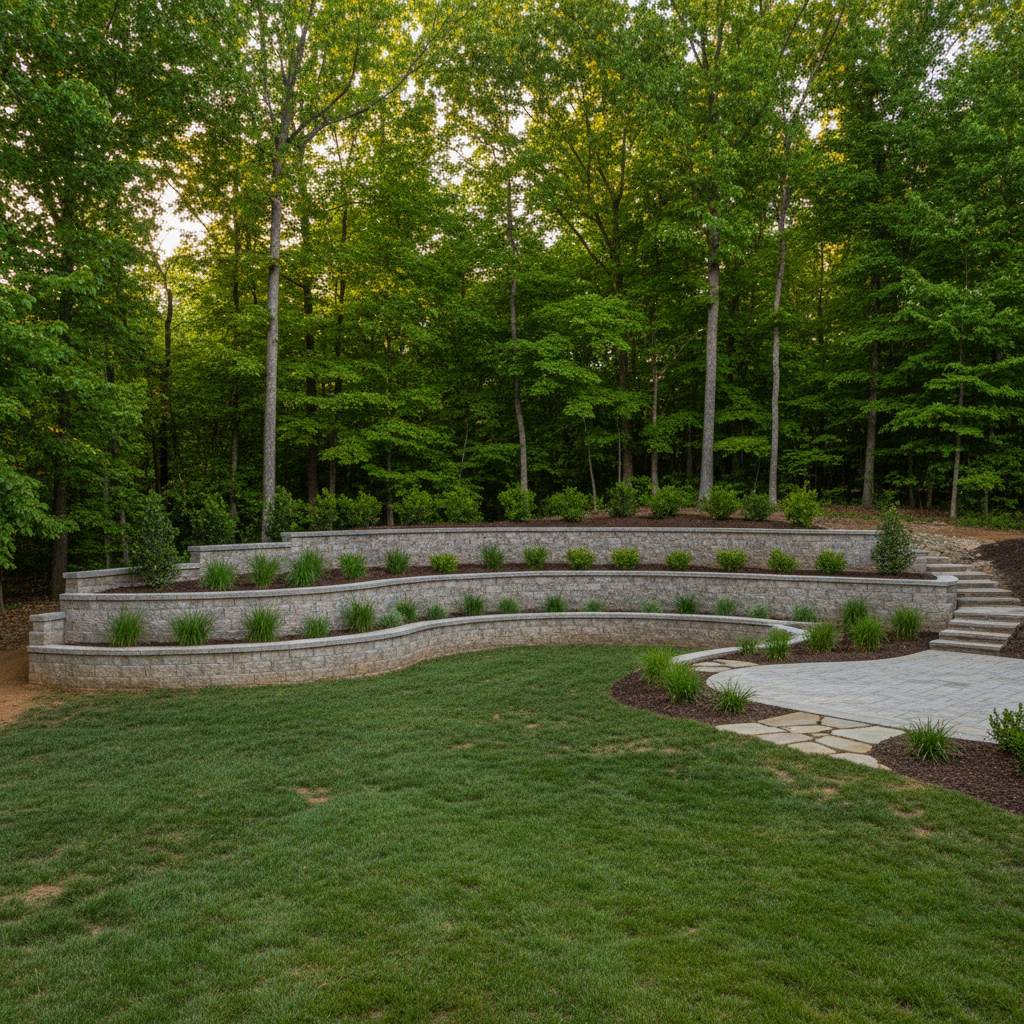
Got a slope in your yard? Or maybe you're dreaming of a nice, flat spot for a patio or a garden? Concrete retaining walls are a fantastic answer, and here in Athens, AL, we build quite a few of them. But you can't just throw one up whenever; it won't last. Our local climate, with its hot, sticky summers and sometimes wet winters, really tells us when to tackle this kind of work and how to keep it looking good.
When's the Best Time to Build a Retaining Wall in Athens?
Honestly, fall and spring are your absolute best bets for concrete work, especially for something as big as a retaining wall. Why? It all boils down to temperature and how much moisture is around.
- Fall (September-November): This is prime time. The brutal summer heat has finally backed off, but we haven't hit those really cold snaps yet. The ground is usually still easy to work with, and the concrete can cure beautifully without drying out too fast or freezing solid. Plus, you get it done before the heavy winter rains might turn the ground into a soggy mess.
- Spring (March-May): Another excellent window. The ground is thawing out, and temperatures are steadily climbing. You miss the extreme cold of winter and the intense heat of summer. Just keep an eye out for those early spring downpours; nobody wants to pour concrete into a muddy swamp.
- Winter (December-February): We *can* do it, but it's definitely trickier. Cold weather really slows down the concrete's curing process. If temperatures dip too low, below freezing, the water in the mix can freeze, which seriously damages the concrete's strength and how long it'll last. We'd have to take extra steps, like using special additives or insulating blankets, and that can bump up the cost and make things more complicated. It's usually smarter to just wait if you can.
- Summer (June-August): The heat and humidity are tough on fresh concrete. It can dry out way too fast, leading to cracks. And let's be honest, it's just plain miserable for the crew too. While we can manage it with careful planning and specific curing methods, it's not ideal. Just picture those long stretches of 90-degree days with high humidity – that's not what concrete loves when it's trying to set up.
What Weather Conditions Really Matter?
Beyond just the season, the specific weather conditions on the day we pour and the days right after are super important.
- Temperature: This is the big kahuna. Ideally, we want temperatures between 50°F and 80°F for pouring and for the first few days of curing. Below 40°F, curing slows way down. Above 90°F, it dries too fast.
- Moisture: Concrete needs moisture to cure properly, but too much or too little at the wrong time is bad news. We certainly don't want to pour in a heavy rain, as that can dilute the mix and weaken the concrete. On the flip side, hot, dry, windy days can suck away moisture too quickly, causing surface cracks. We use special curing compounds or keep the concrete damp for several days to handle this.
- Ground Conditions: Here in Athens, especially in areas with a lot of clay soil, heavy rains can make the ground incredibly soft and unstable. You absolutely need a solid, well-drained base for a retaining wall. If the ground is too wet, we might have to push back the project, or it could mess with the wall's long-term stability.
Protecting Your Concrete Retaining Wall Year-Round
Once your wall is in, you want it to last, right? Here's how to protect that investment:
- Good Drainage is Key: This is, well, *the* key. A well-designed retaining wall by Sunrise Concrete Solutions will always include proper drainage behind it – usually a perforated pipe and gravel backfill. This stops water from piling up behind the wall, which can create immense pressure and eventually cause it to bow or fail. Make sure your downspouts aren't just dumping water right onto or behind your wall.
- Inspect Regularly: Take a walk around your wall a few times a year, especially after heavy rains or a freeze-thaw cycle. Look for cracks, any bulging, or leaning. Small hairline cracks are often normal as concrete settles and expands/contracts, but larger, active cracks need your attention.
- Keep it Clean: Dirt, moss, and mildew can build up. A gentle power wash (not too high pressure, especially on older concrete) can keep it looking sharp. Just be careful with harsh chemicals; they can stain or damage the concrete.
- Watch for Erosion: Make sure the soil in front of and behind the wall isn't washing away. Exposed footings or a lot of missing backfill are big red flags.
- Avoid Heavy Loads: Don't stack heavy stuff or park vehicles directly against the wall unless it was specifically designed for that kind of weight.
- Seal if Recommended: Depending on the concrete's finish and how exposed it is, a good quality concrete sealer can add an extra layer of protection against water getting in, freeze-thaw damage, and staining. It's not always a must-do, but it's something worth chatting about with your contractor.
Building a concrete retaining wall is a pretty big job, and you want it done right so it lasts for decades. Understanding how our Athens weather affects the process and how to maintain it afterward will save you a lot of headaches and money down the road. If you're thinking about a retaining wall, give us a call at Sunrise Concrete Solutions. We're always happy to talk through your project and help figure out the best plan for your property.