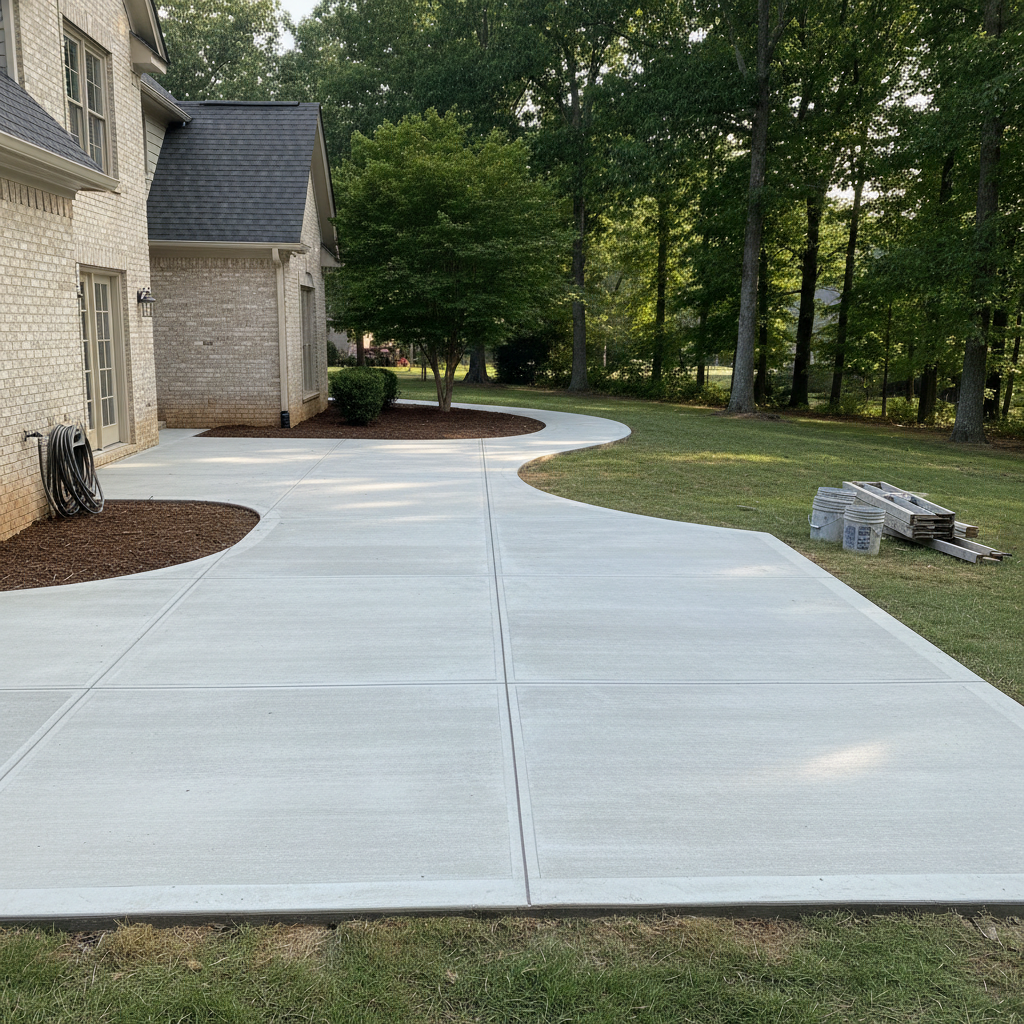
So, you're thinking about that new concrete patio, maybe a driveway, or even a really solid shed foundation? Awesome! That's a smart move, a real investment that adds both value and function to your Athens home. But, you know, I've seen a lot of folks around here – from Limestone Creek all the way to those charming older neighborhoods downtown – stumble into some pretty common traps when they're planning these projects or trying to pick a contractor. Let's talk about what to keep an eye out for. That way, you won't end up regretting your concrete job later.
Mistake #1: Only Looking at the Cheapest Price
This is probably the biggest one out there. Everyone wants to save a buck, and I totally get that. But concrete isn't like buying a gallon of milk; it's going to be a permanent part of your property. If you get three bids and one comes in way, way lower than the others, there's almost always a reason. Maybe they're skimping on materials, or skipping crucial prep work like proper subgrade compaction. Or, heaven forbid, they might not even be insured. A cheap bid often means cheap work, plain and simple, and that's just going to cost you more down the road when it inevitably cracks, settles, or just looks crummy. You'll end up paying twice: once for the bad job, and then again for someone like us at Sunrise Concrete Solutions to come fix it.
Mistake #2: Not Asking for Insurance & Licensing Proof
This one really goes hand-in-hand with that whole low-bid issue. Any concrete contractor worth their salt in Athens, AL, needs to be fully insured. That means they should have general liability insurance to cover any property damage, plus workers' compensation for their crew. If they don't have it, and someone gets hurt on your property or they accidentally damage your house, guess what? You could be stuck with the bill. It's a huge risk to take, all just to save a few hundred dollars. Always ask for current certificates of insurance; don't just take their word for it. A good contractor will be happy to show them to you.
Mistake #3: Skipping the Site Prep Details
Here's the thing: concrete is only as good as what's underneath it. Especially here in North Alabama, we've got a lot of clay soil, which can really expand and contract when it gets wet or dries out. If the ground isn't prepped right — meaning it's dug out to the correct depth, compacted really well, and has a good base layer of gravel — your concrete is going to crack and shift. I've personally seen driveways that looked fantastic for a year, then started looking like a jigsaw puzzle because the contractor rushed the subgrade. Make sure your contractor talks about excavation, compaction, and what kind of base they're planning to use. If they just want to pour directly on existing dirt, well, that's a massive red flag.
Mistake #4: Ignoring Expansion Joints and Control Joints
Concrete cracks. It's not a question of if, but when. The real trick is making sure it cracks where you want it to. That's exactly what expansion joints and control joints are for. Expansion joints allow movement between different concrete slabs or between concrete and other structures (like your house foundation). Control joints, on the other hand, are cuts made into the slab to create weak points. This encourages any cracks to form neatly along those lines, instead of just randomly splitting your beautiful new surface. If your contractor doesn't have a clear plan for these, or tries to cut corners on them, you're just setting yourself up for ugly, haphazard cracking. Nobody wants that.
Mistake #5: Not Getting Everything in Writing
A verbal agreement is worth about as much as the paper it's written on — which is to say, absolutely nothing. You need a detailed contract that spells out every single thing: the scope of work, what materials they'll use (like concrete strength, rebar, or mesh), the start and end dates, the payment schedule, and any warranty information. What color is the concrete going to be? Are they applying a sealer? How thick will it be? All these little details really do matter. This contract protects both you and the contractor, preventing misunderstandings down the road. If a contractor seems hesitant to put everything in writing, just walk away.
Mistake #6: Not Checking References or Past Work
You wouldn't hire an employee without checking their references, right? You should treat your concrete contractor the same way. Ask for references from recent jobs and actually call those people. Ask them about their experience, how the contractor handled any issues, and if they'd hire them again. Even better, ask if you can go see some of their completed work. A good contractor will be proud to show off their projects. It really gives you a feel for their quality and how much attention they pay to details.
Doing your homework upfront might seem like a bit of a pain, but trust me, it's nothing compared to the hassle and expense of dealing with a bad concrete job. So take your time, ask all the right questions, and choose wisely. Your Athens home truly deserves a concrete installation that lasts.